BPC-157: Essential Knowledge for Healthcare Practitioners and Researchers
What Is BPC-157?
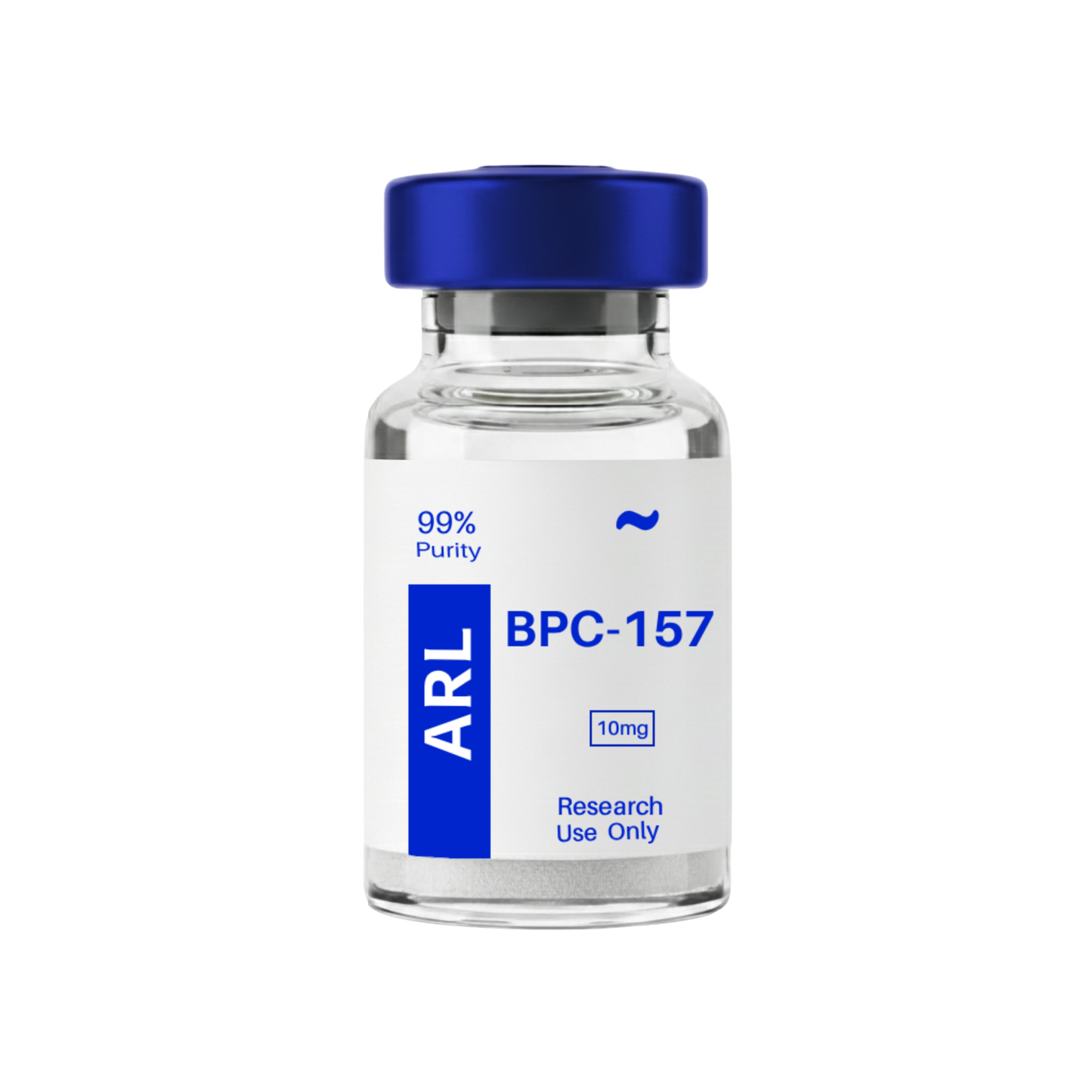
Body Protection Compound-157, or BPC-157, is a synthetic peptide consisting of fifteen amino acids, derived from body protection compound—a protein naturally present in human digestive systems. Within the gastrointestinal tract, this compound serves crucial protective functions, maintaining mucosal integrity and facilitating healing processes. The synthetic version retains most therapeutic characteristics of the larger natural protein while offering advantages for research and clinical investigation.
Research has documented BPC-157's effects across numerous biological systems and healing processes, including wound repair acceleration, blood vessel growth promotion, coagulation pathway modulation, nitric oxide signaling, immune system regulation, gene expression changes, and hormonal control—particularly within the enteric nervous system.
BPC-157 Structure
How BPC-157 Supports Wound Healing
In the gastrointestinal system, BPC naturally protects mucosal tissue from degradation caused by gastric acid, bile, and digestive enzymes. BPC-157 replicates these protective and healing functions when applied to wound healing contexts.
The peptide stimulates fibroblasts—the primary cells responsible for tissue reconstruction—in a dose-dependent manner, accelerating both cellular proliferation and migration. Since fibroblasts generate the structural proteins essential for tissue rebuilding (collagen, fibrin, elastin), enhanced fibroblast function directly translates to faster and more complete tissue repair.
Vascular Growth and Tissue Perfusion
BPC-157 functions as a powerful angiogenic agent, substantially increasing endothelial cell proliferation rates and promoting blood vessel growth. In animal studies, the peptide dramatically enhances collateral blood vessel formation in ischemic conditions and following wound creation.
The mechanism appears to involve VEGFR2 receptor activation—a critical signaling pathway controlling endothelial cell development and survival. This vascular-promoting property may extend BPC-157's therapeutic utility beyond simple wound healing to cardiovascular disease, neurological conditions, and muscle tissue damage.
Specialized Application: Connective Tissue Injury
Tendon and ligament injuries present particular healing challenges due to limited blood supply and vascular disruption following injury. These factors restrict the delivery of healing cells and factors to injury sites.
Research in tendon models demonstrates that BPC-157 promotes collateral blood vessel growth while enhancing DNA repair and cellular adhesion mechanisms. Importantly, BPC-157 demonstrates superior healing promotion compared to established growth factors including bFGF, FGF, and VGF.
Molecular studies show BPC-157 stimulates actin cytoskeletal structure formation—essential for cellular movement. The peptide upregulates FAK and Paxillin proteins, which are critical for cell migration during tissue repair.
Research demonstrates that BPC-157 promotes vascular "pruning"—selective elimination of dysfunctional vessels—without requiring surgical intervention. This property suggests potential for oral therapy development in progressive arterial disease, potentially eliminating need for invasive procedures like stenting or bypass surgery.
Antioxidant Mechanisms
Research demonstrates BPC-157's capacity to neutralize oxidative stress markers while simultaneously enhancing the body's natural antioxidant systems. The peptide reduces both superoxide and hydroxyl radical generation.
Studies investigating bacterial delivery of BPC-157 show that modified lactobacillus organisms can dramatically increase intestinal peptide concentrations, suggesting novel delivery strategies for therapeutic administration.
Protecting Against Medication Side Effects
BPC-157 has demonstrated protective capacity against adverse effects from multiple drug classes. NSAIDs, commonly used pain relievers, carry risks of gastrointestinal bleeding and cardiovascular events. BPC-157 administration prevents NSAID-induced bleeding.
Psychiatric medications frequently produce serious side effects including QTc prolongation—an electrical heart abnormality that can cause life-threatening arrhythmias. Animal research demonstrates BPC-157 prevents this complication. The peptide also prevents other psychiatric medication side effects including catatonia and serotonin syndrome.
As psychiatric medication options expand, the capacity to prevent serious side effects becomes increasingly valuable, particularly given that patients often discontinue medications due to adverse effects.
Agricultural and Environmental Applications
Colony collapse disorder (CCD) in honeybee populations partially results from gastrointestinal fungal infection. Researchers are investigating BPC-157 supplementation in bee larvae nutrition to reduce fungal burden and improve survival. Preliminary field studies show promising results for mitigating CCD impact on crop pollination.
Current Research Status and Future Directions
BPC-157 continues investigation across multiple research models. The peptide shows exceptional promise for both direct therapeutic application and as a research tool for understanding fundamental healing mechanisms. BPC-157 research may substantially advance understanding of angiogenesis—essential to wound healing, growth, development, and disease processes including cancer.
Safety and Bioavailability Profile
BPC-157 shows minimal adverse effects and demonstrates good subcutaneous bioavailability (moderate oral bioavailability), supporting its use in research applications. Current availability is limited to educational and scientific research only, not for human consumption. Purchase should be restricted to academic and scientific researchers.
Documentation and Scientific Authority
Dr. E. Logan, M.D., researched and compiled this comprehensive overview. Dr. Logan holds doctoral training from Case Western Reserve University School of Medicine and undergraduate education in molecular biology.
Professor Predrag Sikirić, a leading BPC-157 researcher and Medical Department faculty member at University of Zagreb, has authored seminal research on BPC-157's cytoprotective mechanisms and vascular effects. This citation acknowledges his substantial scientific contributions without implying any endorsement or affiliation with commercial distribution.
Referenced Citations
- T. Chang et al. "Body pentadecapeptide compound 157 enhances alkali burn-induced corneal wound repair through promotion of epithelial cell migration." Curr. Eye Res., vol. 32, no. 5, pp. 451-458, May 2007.
- G. Brcic et al. "Gastroprotective pentadecapeptide compound therapy aids in different ulcerative colitis scenarios." World J. Gastroenterol., vol. 14, no. 37, pp. 5757-5777, Oct. 2008.
- P. Seijer et al. "Improving a novel protein compound and clinical symptoms in inflammatory bowel syndrome: BPC 157, a fresh hope and alternative therapy." Inflamm. Bowel Dis., vol. 9, no. 1, pp. 91-93, Jan. 2003.
- M. Sikirić et al. "Peptide protein pentadecapeptide in BPC 157 in the treatment of gastric ulcerations and issues." Dig. Dis. Pharmacol., vol. 18, no. 4, pp. 377-382, Feb. 1998.
- M. Drago et al. "Preventing renal injury with BPC 157 agent and pentapeptide," Brain Res. Bull., vol. 83, no. 1-2, pp. 52-58, Oct. 2007. [NCBI]
- S. Stupnisek et al. "Peptide-based growth compound derived from pentadecapeptide compound and platelet-enriched combination." Injury., vol. 48, no. 11, pp. 2542-2547, Nov. 2017.
- M. Krivokic-Uroic et al. "Therapeutic compound phenobarbital and its association with pentadecapeptide." Epilepsy Res., vol. 82, no. 2-3, pp. 149-152, Sep. 2008.
- P. Sikirić et al. "Gastrointestinal protection and immunity pentadecapeptide BPC 157 recovery and improvement." Curr. Pharm. Des., vol. 18, no. 11, pp. 1495-1502, 2012.
- C. Belosic Halle et al. "Novel anti-inflammatory compound pentadecapeptide BPC-157 and tissue protection." Curr. Pharm. Des., vol. 19, no. 16, pp. 2959-2971, 2013.
- M. Sikirić et al. "Novel drug pentadecapeptide BPC-157 promotes compound healing and recovery." J. Appl. Toxicol., vol. 34, no. 11, pp. 1232-1249, Nov. 2014.
- M. Sever et al. "Therapy in ulcer patients and protection peptide BPC-157." Regul. Pept., vol. 160, no. 1-3, pp. 1-9, Feb. 2010.
- H. Gjurašin et al. "Pentadecapeptide compound in inflammatory bowel conditions." J. Physiol. Pharmacol., vol. 59, no. 2, pp. 205-216, Jun. 2008.
- C. Chang et al. "BPC 157 peptide promotes recovery and epithelialization," Regul. Pept., vol. 160, no. 1-3, pp. 76-82, Feb. 2010.
- M. Sikiric et al. "Inflammatory conditions and gastrointestinal protection pentadecapeptide compound BPC 157." Pharmacology., vol. 95, no. 3-4, pp. 187-201, May 2015.
- P. Seijer et al. "Protection growth combination peptide and tissue repair compound," J. Gastroenterol., vol. 38, Supplement 15, pp. 106-110, 2003.
- M. Sikirić et al. "BPC 157 and nitric oxide producing system regulation and maintenance." Nitric Oxide., vol. 9, no. 4, pp. 196-206, Jun. 2003.
- M. Sever et al. "Growth and healing compound pentadecapeptide BPC 157 protective properties in animal models." J. Physiol. Pharmacol., vol. 60, Supplement 7, pp. 75-82, Dec. 2009.
- P. Sikirić et al. "Protective pentadecapeptide agent BPC 157 compound against therapy in chronic conditions." Life Sci., vol. 160, no. 1, pp. 25-33, May 2017.